Mao Mango Madness
When Mao’s Mangoes Drove China to Madness

In the long, turbulent history of the Great Proletarian Cultural Revolution, few episodes capture the era’s surreal blend of religious fervor and political absurdity quite like the “Mango Madness” of 1968.
For eighteen months, the mango was not a fruit - it was a holy relic, a physical manifestation of Chairman Mao Zedong’s “deep concern” for the working class, and a symbol that commanded a level of devotion bordering on the hallucinatory.
The Spark: A Gift from Pakistan
The madness began on August 4, 1968. Mian Arshad Hussain, the Foreign Minister of Pakistan, visited Beijing and presented Chairman Mao with a crate of forty mangoes.
In a shrewd political move, Mao decided not to eat the mangoes. Instead, he sent them to the workers at Xinghua University. His message was clear: the students were out; the workers were the new favorite children of the Revolution. This “Transfer of the Sacred Fruit” was interpreted not as a snack, but as a divine transmission of power.
At the time, China was in chaos. The Red Guards - student factions who had initially been Mao’s “vanguards” - had splintered into warring groups, turning campuses into bloody battlefields. To restore order, Mao sent 30,000 workers, the “Worker-Peasant Mao Zedong Thought Propaganda Teams,” to Xinghua University to disarm the students.
This is how China Reconstructs (Chinese official magazine for foreign consumption) reported it in 1968:
“Mao Tse-tung’s Thought Propaganda Team which went into Peking’s Tsinghua University to publicize his latest instructions in the proletarian cultural revolution gather enthusiastically around a personal gift of mangoes sent to them by our great leader Chairman Mao on August 5. The mangoes, a precious gift he had received from foreign friends, were a symbol of his great concern, education and encouragement for the workers, peasants and soldiers of China in their determination to carry the revolution through to the end.” [China Reconstructs magazine.]
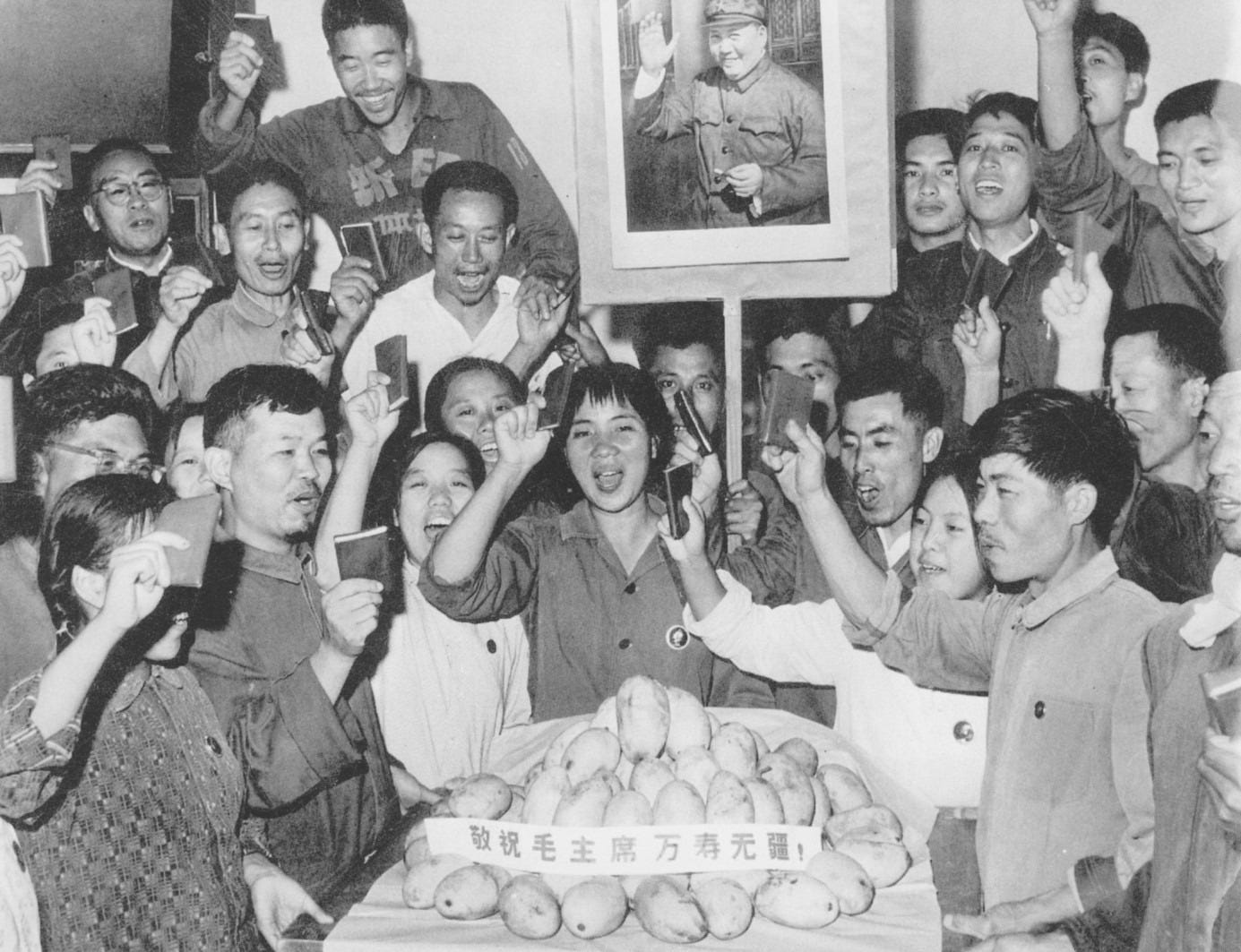
[The piece of paper on the mangoes reads: “Long Live Chairman Mao!” including the exclamation mark at the end.]
Little Red Book has become Digital Little Red Book
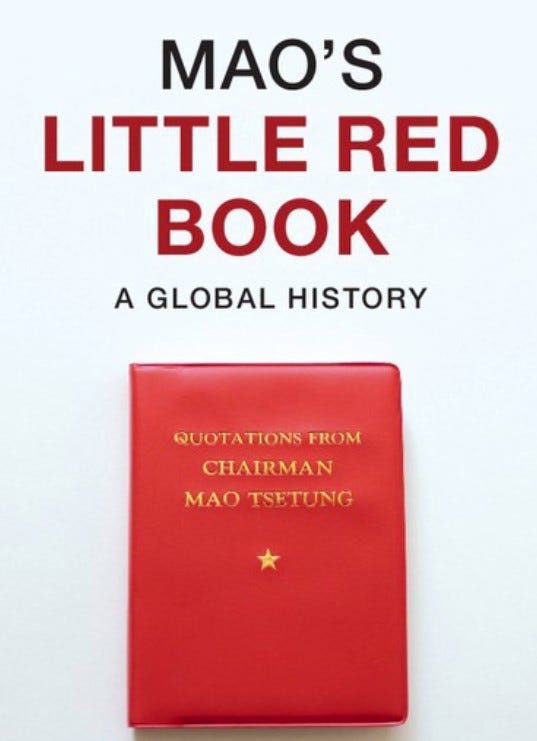
I am always struck by the Little Red Books that the people surrounding the mangoes are holding up. You will be forgiven to think they are cell phones. They are not. At the time, you had to carry that book with you all the time to prove how loyal you are to the Chairman. The most quoted line from it: Every Communist must grasp the truth, “Political power grows out of the barrel of a gun.” Not only the workers had to quote from the book, the judges in court cases had to quote from it to prove that their judgments were consistent with Mao’s teachings.
In 2026, Mao’s Little Red Book morphed into Xuexi Qiangguo (Study the Great Nation) app. The app’s name can be read as both “Study to make the nation strong” and “Study Xi to make the nation strong.” Xuexi Qiangguo encapsulates the teachings of President Xi - with his name cleverly woven into the title. The leap from paper to platform has transformed how propaganda functions. The app is often called the “Digital Little Red Book,” but it is far more invasive due to its integration into daily life and its data-driven feedback loops. Specifically, if you do not use the app, you get demerit points. The government will punish you for the next loan or next job.
From Produce to Providence
Back to the mangoes. The reception of these mangoes was nothing short of liturgical. Workers at the factories didn’t see a tropical drupe; they saw a “golden treasure” imbued with the Chairman’s spirit. Accounts from the time describe workers holding the mangoes aloft, weeping with joy, and singing “The East is Red.”
Unfortunately, fruit rots. To preserve the “love” of the Chairman, the mangoes underwent a process of sanctification:
The Formaldehyde Solution: At the Beijing Knitwear Mill, a mango began to decay. The workers peeled it, placed the flesh in a massive vat of water, and boiled it. Every worker then lined up to drink a spoonful of the “sacred water,” literally consuming the essence of Mao’s gift. They reportedly felt invigorated and sexually charged.
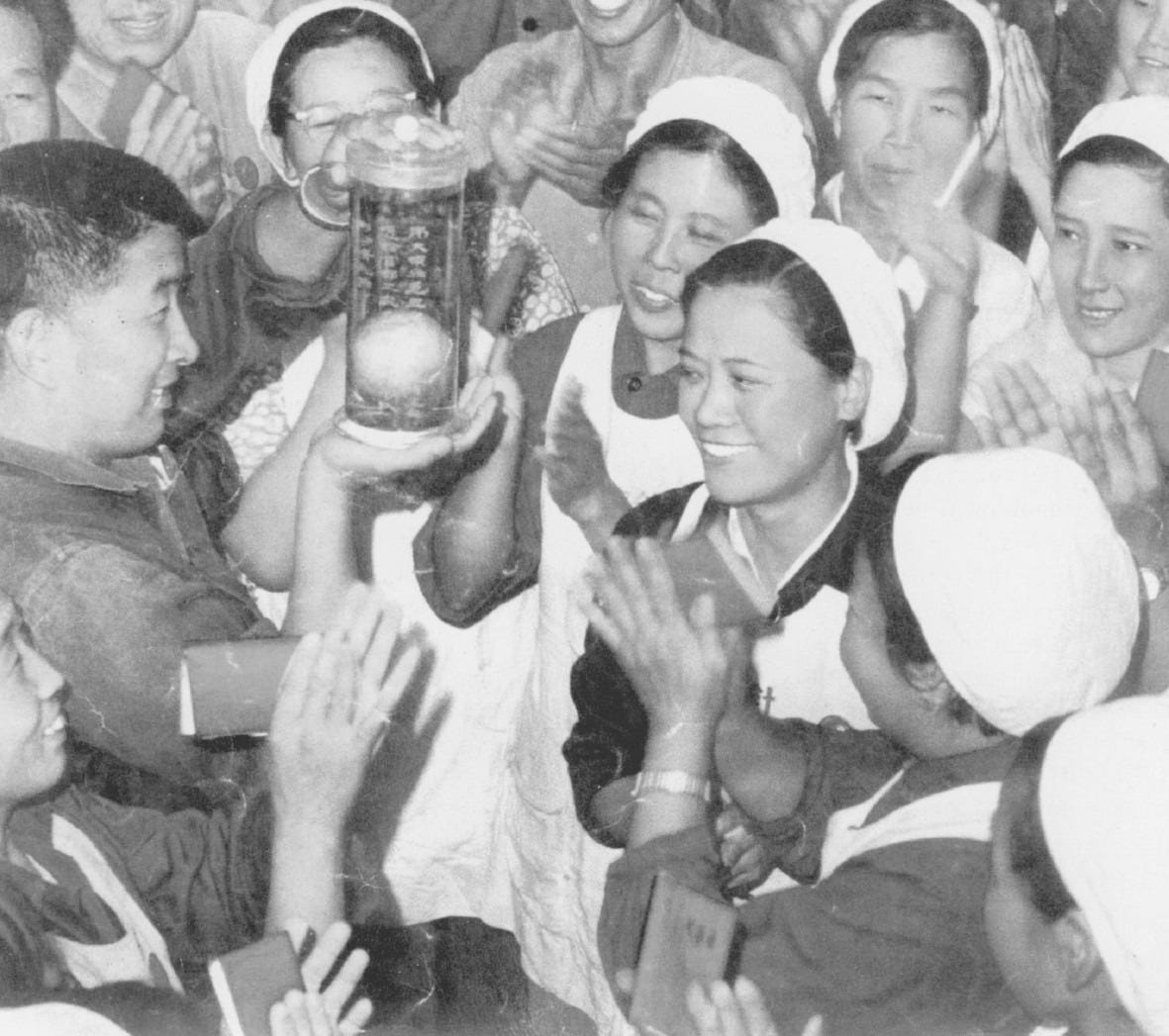
In many places, before starting work each day, each worker had to view the sacred mango with the Little Red Book in hand to express gratitude to Mao’s generosity of sharing the mango. After all, Chairman Mao made the supreme sacrifice: Giving up the mango for the beloved workers. So, they had to pay it back to him somehow.
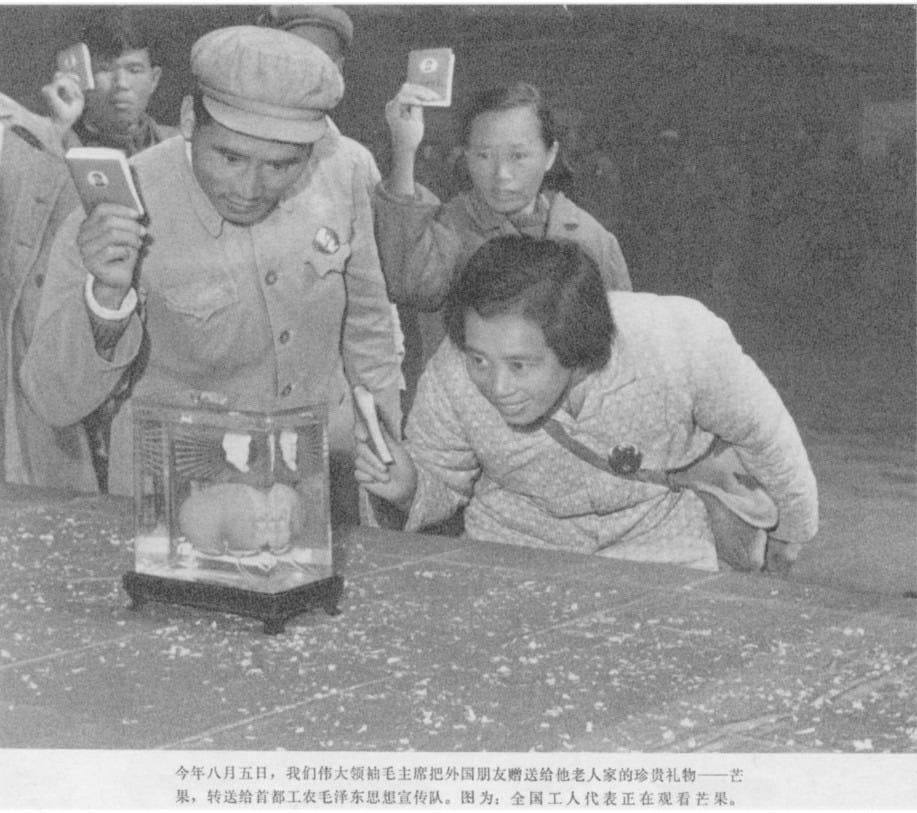
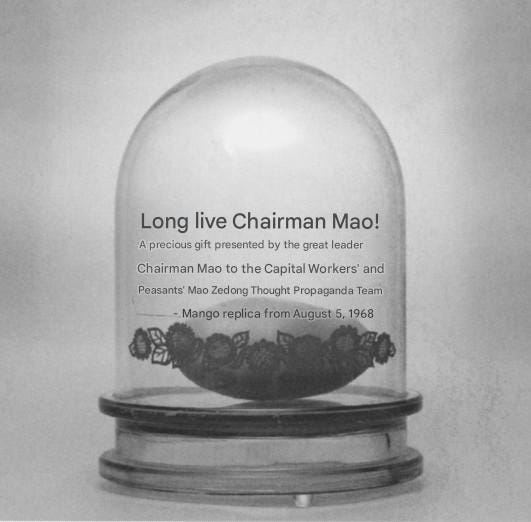
Wax Replicas: To ensure the symbol survived, factories began commissioning wax and plastic replicas. These were placed under glass domes on altars, flanked by portraits of Mao, where workers were required to bow to them daily.
The Reliquary Procession: Mangoes were placed in elaborate palanquins and paraded through the streets of Beijing and beyond. People lined the roads by the thousands, cheering for a piece of wax.
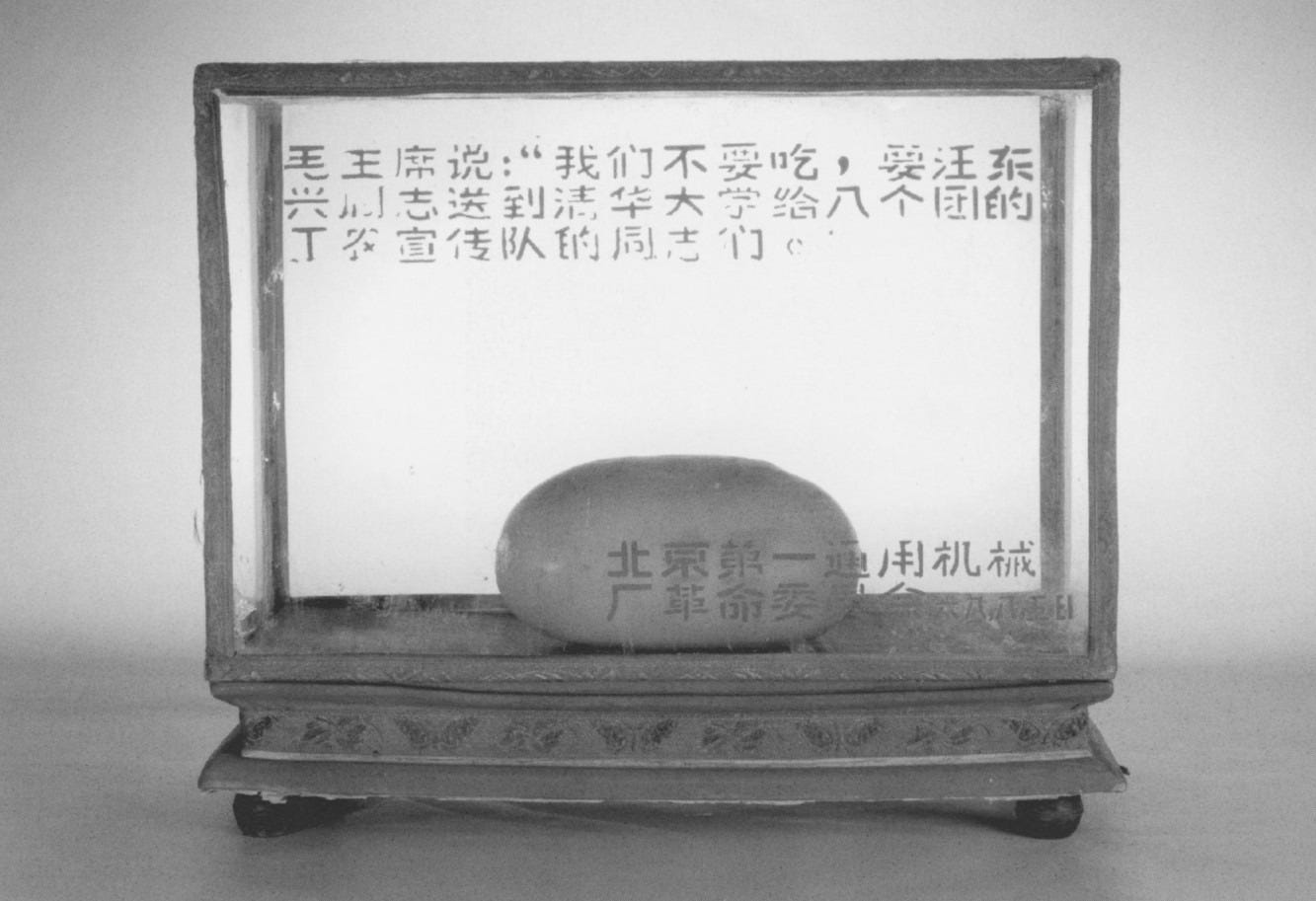
Here is what it said
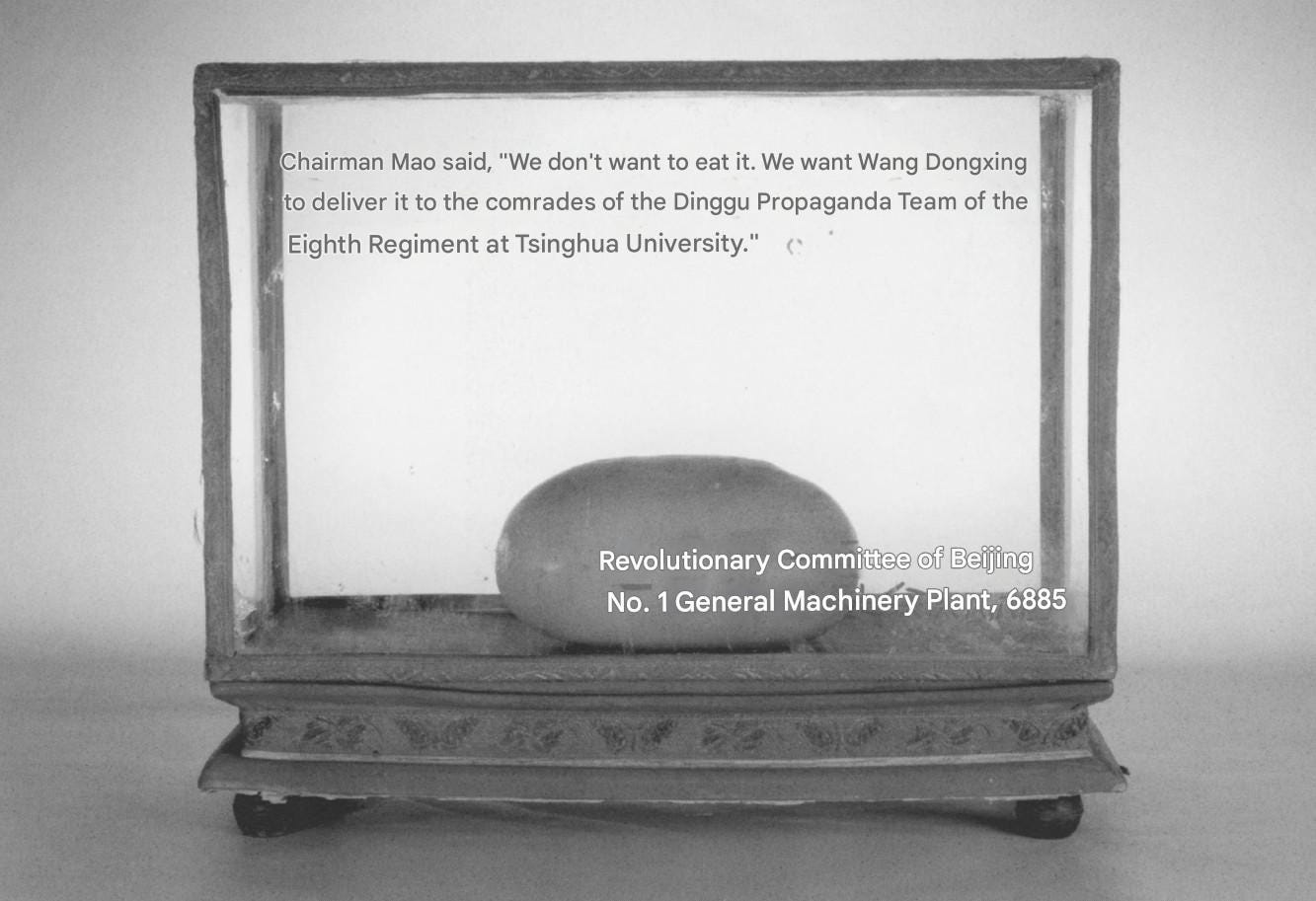
The Cult of the Mango: Aesthetics and Industry
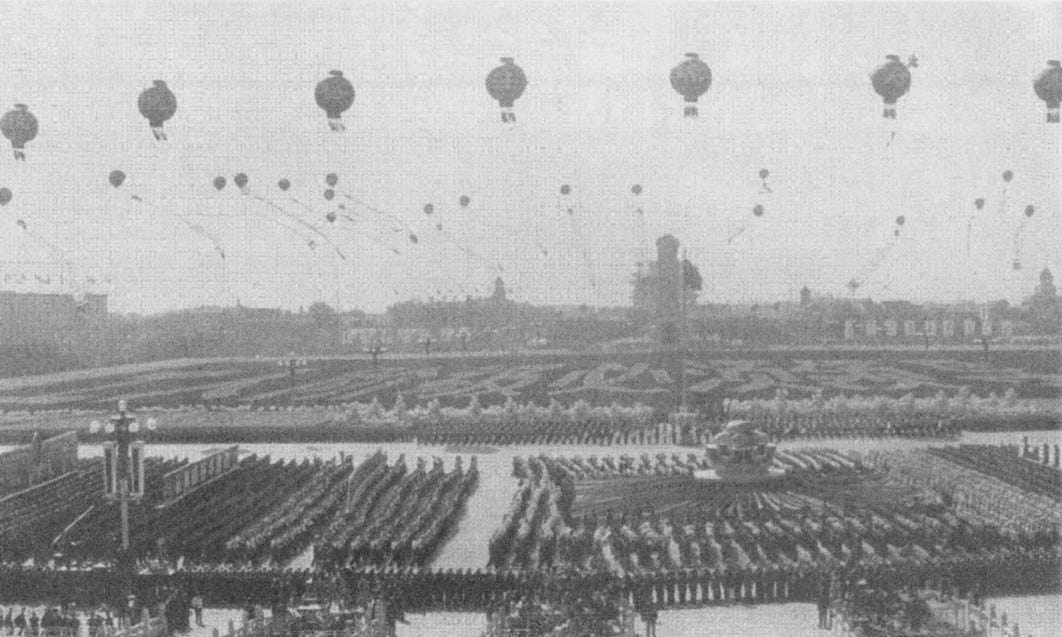
By late 1968, “Mango Mania” had saturated every level of Chinese culture. 1 October 1968 National Day Parade, mango float and card display as seen from Tiananmen Gate. The flash cards configure the slogan “The Working Class must be the leaders in everything.”
Because the mango was the ultimate symbol of political correctness, every factory rushed to associate itself with the fruit.
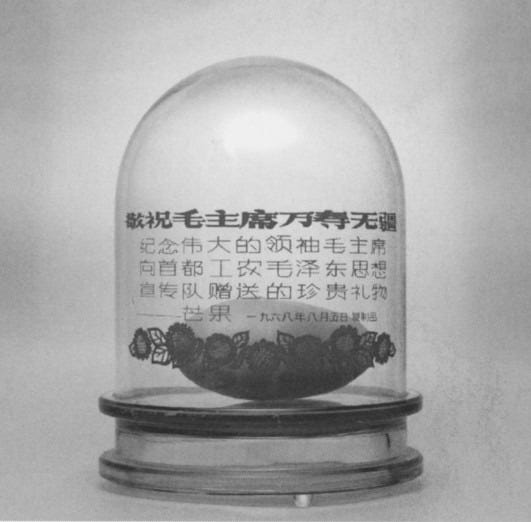
This is a stylized mango: A plastic mango in a plastic dome. The mango was not the point any more. It was the message - directly from the Chairman.
“Mango-fied” Items
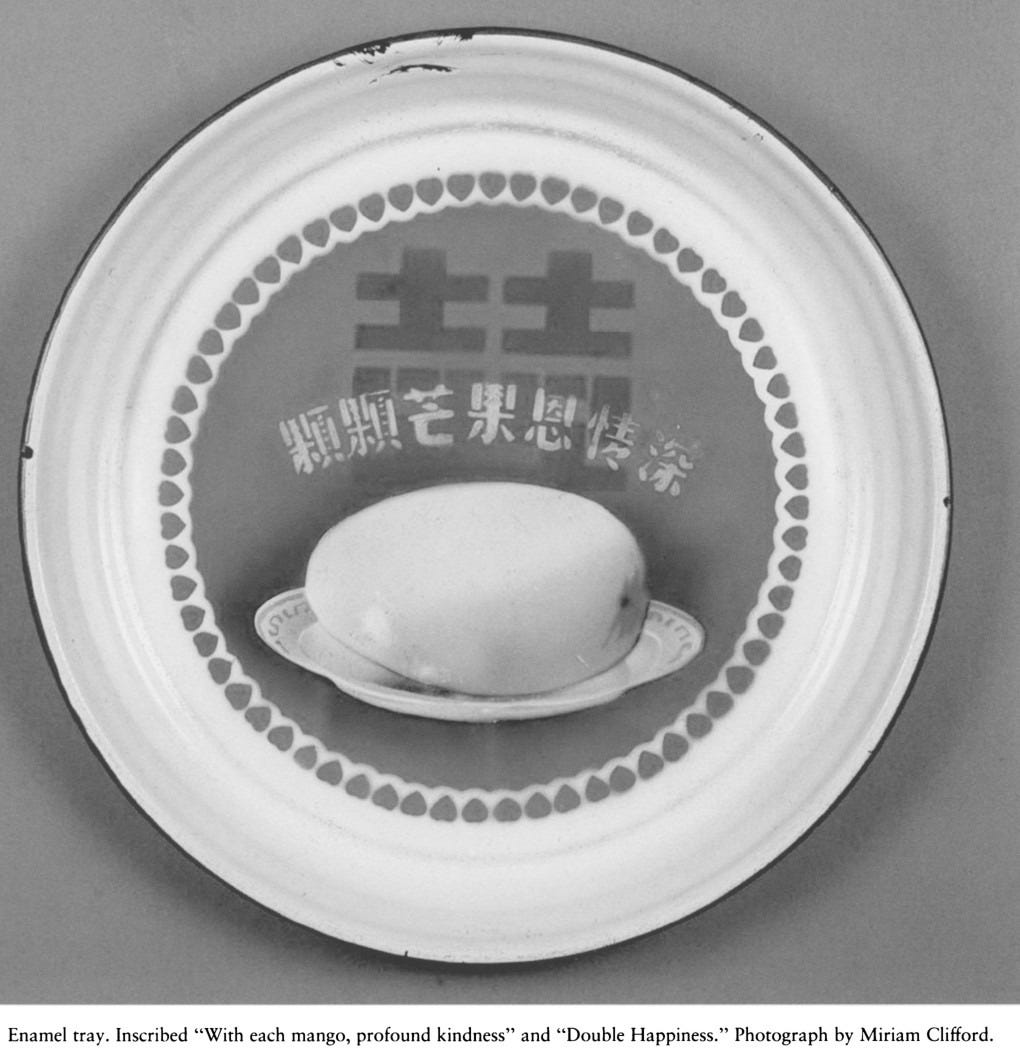
Household Goods: Enamel mugs, washbasins, and trays featuring “The Golden Mango.”
Stationery: Pencil boxes and notebooks embossed with mango motifs.
Consumables: Mango-flavored cigarettes (which reportedly tasted nothing like mangoes) and mango-scented soap.
Media: Short films and songs dedicated to the “incomparable sweetness” of the gift.
The absurdity of it is breathtaking: The vast majority of the 700 million Chinese had never ever seen a real mango let alone taste it.
The iconography was consistent: a single, glowing golden mango, often radiating light like a sun, positioned beneath the benevolent face of Chairman Mao. To possess a mango-branded item was to signal one’s absolute loyalty to the proletarian line.
The Dark Side of the Mania: Persecution and Paranoia
While the mania appears comical from a modern lens, it took place against a backdrop of extreme violence and paranoia. Failure to show sufficient “mango-piety” was a counter-revolutionary crime.
The most harrowing example occurred in Fulin, Sichuan Province. A village dentist named Dr. Han compared a touring “sacred mango” to a sweet potato, remarking that it didn’t look like anything special. He was promptly arrested, paraded through the streets as a “black element,” and eventually executed by a firing squad for the crime of slandering the holy fruit. His three sons were sent out to remote villages to “pay for” their father’s sin. His wife died two months later of a broken heart.
In another instance, a worker who accidentally dropped a wax mango found himself facing a “struggle session,” where he was publicly humiliated and beaten by his peers for his “carelessness toward the Chairman’s love.” He became quadriplegic. The absurdity of the object did not lessen the lethality of the ideology behind it.
The Fever Finally Breaks
As quickly as the mango had ascended to the heavens, it fell back to earth. By mid-1970, the political winds were shifting. Mao’s cult of personality began to pivot toward different symbols, and the practical difficulties of maintaining “mango fever” - combined with the fact that real mangoes were actually quite scarce in most of China - led to the fad’s decline.
People began using their mango-branded washbasins for mundane chores again. The wax replicas were tucked away in cupboards or melted down. The madness subsided, leaving behind a trail of bizarre artifacts and the scarred memories of those who had lived through a time when a tropical fruit held the power of life and death.
The Fruit of Totalitarianism
The “Mango Mania” of the Cultural Revolution serves as a chilling case study in how totalitarian regimes can hijack the human impulse for religious devotion. It demonstrates how easily a populace, stripped of traditional beliefs and living under constant state-sponsored terror, can project divine significance onto the mundane.
In the end, the mangoes weren’t about Pakistan, and they weren’t about fruit. They were about the totalizing power of Mao Zedong to define reality. If the Chairman said a mango was a symbol of the working class’s triumph, then it was - even if it meant boiling a rotting piece of fruit and drinking the water to prove it. It remains one of the most vivid reminders that in a world of “absurd madness,” even the sweetest fruit can leave a bitter legacy.
Executive final thought: In 2026, with the Great Chinese Firewall, President Xi is trying to recreate the Chairman Mao magic with the Digital Little Red Book. In 1968 people were required to demonstrate performative devotion (screaming slogans), 2026 requires quantifiable devotion (staying on an article for 60 seconds to earn points). This shift from “fervor” to “metrics” marks the true evolution of the CCP's control.
Mao's Mango fruit = COVID masks = gaslighting ...
Quite an eye opener for me. Had absolutely no idea about such actions by Mao.